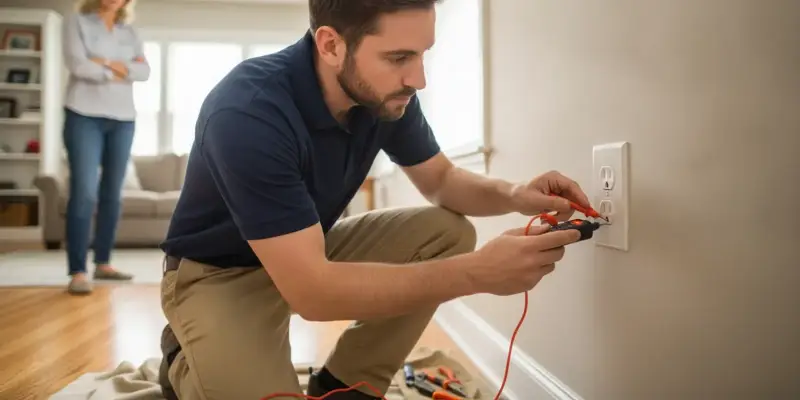
Some electrical problems look small: a warm outlet, a switch that crackles, or a breaker that keeps tripping. But minor electrical repairs homeowners should not DIY can involve energized wiring, hidden damage, or a fault that is not visible from the room. Knowing when to stop, keep clear, and call a certified professional can help protect people and property while the issue is assessed.
Call 724-996-1463 for help or a free estimate
Why Can a Small Electrical Problem Be Risky?
Electrical equipment can remain hazardous even when a device seems switched off. A wall switch does not necessarily disconnect every conductor in a box, and a breaker label may not accurately identify the circuit. A loose connection can also heat up behind a cover without leaving an obvious mark at first.
DIY videos and simple-looking replacement parts can make electrical work seem routine. The risk is that a homeowner may not know what is connected inside the wall, whether power is fully disconnected, or whether a visible symptom points to a larger problem. A repair that appears to solve the immediate issue can leave damaged wiring or an unsafe connection in place.
That does not mean you should ignore a problem until a professional arrives. You can note what happened, keep people away from a suspect outlet or fixture, and, when it is safe to do so, switch off the circuit at the breaker. The key is to avoid opening electrical boxes, touching exposed wiring, or trying repeated fixes when the cause is unclear.
Which Warning Signs Should You Take Seriously?
Stop using the affected outlet, switch, appliance connection, or fixture if you notice unusual heat, a burning odor, buzzing, crackling, visible sparks, discoloration, or a loose or broken cover. These signs do not identify the exact fault, but they are reasons to have the equipment assessed rather than continue using it.
- Repeated breaker trips: A breaker that trips again after being reset may be responding to an ongoing fault or overload. Do not keep resetting it to restore power.
- Warm or discolored surfaces: Heat, scorch marks, or melted plastic near an outlet or switch call for prompt attention. Do not touch a surface that is hot, smoking, or visibly damaged.
- Buzzing, crackling, or sizzling: Unusual sounds from a switch, outlet, panel, or fixture should not be treated as a normal operating noise.
- Sparks, smoke, or a burning smell: Keep clear. If there is active fire or immediate danger, leave the area and contact emergency services.
- Shock or tingling: Stop using the item and keep others away. Do not try to reproduce the sensation or investigate the equipment yourself.
- Water near electrical equipment: A wet outlet, panel, fixture, or appliance can create a serious hazard. Do not touch wet equipment or stand in water to reach a switch.
A single flicker may have more than one possible cause, from a bulb issue to a circuit concern. If it happens repeatedly, affects several rooms, or occurs alongside heat, noise, odor, or tripping, make a note of the pattern and request an assessment. Avoid guessing that the symptom is harmless just because it stops temporarily.
What Can You Check Without Opening Electrical Equipment?
There is a useful difference between observing a problem and trying to repair it. You can note which light, outlet, or room is affected, whether the issue happens at a certain time, and whether other devices lose power at the same time. If an appliance is involved, stop using it and record its make or model if that information is easy to access without moving or touching damaged equipment.
For a lamp that is cool, intact, and unplugged, you may follow the manufacturer's instructions for checking its user-replaceable bulb. Do not do this if the lamp, plug, cord, socket, or nearby outlet is hot, damaged, wet, or making unusual sounds. Do not remove covers or reach into a socket. If changing a bulb does not resolve a recurring flicker, or the light is part of a fixed fixture, leave further investigation to a professional.
You can also look for a simple pattern without testing the circuit: does the problem affect one device or several rooms, and did it begin after a known change? Avoid unplugging or moving heavy appliances if their cords, plugs, or surrounding area appear damaged. Never use an extension cord as a permanent workaround for an outlet that seems unreliable. Observations can help explain the issue, but they do not confirm that a circuit is safe.
When Should You Shut Off Power, and When Should You Stay Away?
If there is no smoke, fire, water, sparking, or other immediate hazard and you can reach the breaker panel safely, you may switch off the breaker for the affected circuit. Do not remove the panel cover or touch wires. If the panel is wet, hot, buzzing, damaged, or sparking, do not approach it to operate a breaker.
When you are unsure which breaker controls the problem, do not open the device to investigate. If a breaker trips again, leave it off rather than repeatedly switching it back on. Keep children, guests, and pets away from the affected area. If there is an active fire or an immediate threat to someone's safety, get out and contact emergency services. If an exterior service line or utility equipment appears damaged, stay well clear and contact the appropriate utility or emergency responder.
Do not rely on a wall switch, unplugging a nearby device, or a verbal assurance that power is off as proof that wiring is safe to touch. Leave testing and work inside electrical equipment to a qualified professional. If you have been shocked, prioritize medical help when needed and do not touch another person who may still be in contact with an electrical source.
How Do You Decide Whether to Seek Urgent Help?
Use the condition of the area, not the apparent size of the repair, to judge how quickly to act. Active smoke or fire, sparking, a strong burning odor, shock, or water in contact with electrical equipment calls for immediate caution: get people away and contact emergency services when there is immediate danger. Do not approach the panel or try to put out an electrical fire yourself.
A warm outlet, repeated breaker trip, or intermittent flicker without active smoke, fire, or another immediate threat still deserves prompt attention, but it may be possible to arrange a professional assessment rather than treat it as a fire emergency. Stop using the affected equipment, keep others away, and switch off the circuit only if the breaker can be reached safely. If the situation worsens, new symptoms appear, or you are uncertain whether anyone is in danger, move away and seek urgent assistance.
When you call, give a direct description instead of minimizing the concern as a small repair. For example, say that an outlet is warm and the breaker has tripped twice, or that there is a burning odor near a switch. Clear details help the person receiving the call understand the reported risk and guide you on what to do next without asking you to diagnose the wiring.
Which Minor Electrical Repairs Should Homeowners Leave to a Professional?
A useful rule is to call for help whenever a task involves opening a box, handling conductors, changing fixed wiring, or diagnosing an electrical fault. A job can look minor while still requiring the right tools and experience to confirm the cause and complete the work safely.
SituationSafer homeowner responseProfessional assessment or workOutlet is warm, discolored, loose, or making noiseStop using it; keep people away. Switch off its circuit only if the panel is safe to reach.Inspect the outlet and wiring, identify the cause, and determine whether repair or replacement is appropriate.Breaker trips more than onceDo not keep resetting it or move loads around to mask the symptom.Assess the circuit and connected equipment to find why it is tripping.Switch or fixture sparks, buzzes, or smells burntStop operating it and stay clear of hot, smoking, or damaged parts.Check the switch, fixture, connections, and related circuit for a fault.Outlet, switch, or fixture needs replacement or installationDo not remove the cover or disconnect wires as a trial repair.Handle the installation or replacement and verify that the connection is sound.Several lights flicker or power behaves inconsistentlyRecord which rooms and devices are affected and when; avoid repeated breaker resets.Investigate whether the issue is local to a device, a circuit, or another part of the electrical system.Electrical equipment is wet, sparking, smoking, or near a fireDo not touch it or approach an unsafe panel. Move away and seek urgent help.Have the hazard assessed only after the area is safe for professional work.
This table is a guide for deciding what to do next, not a diagnostic checklist. Symptoms can overlap, and the appropriate repair depends on what an on-site assessment finds. Keep the description factual: what you saw, what was operating, whether a breaker tripped, and whether there was heat, sound, odor, or water.
Tasks such as replacing a fixed light fixture, changing a wall switch, adding an outlet, or tracing why a circuit has stopped working may be described as quick repairs. Each involves more than attaching a visible part: the existing wiring and connections have to be assessed, and the actual cause of a fault may be elsewhere. If a repair needs a tool inside a box or panel, involves a conductor, or changes fixed wiring, do not use it as a first project or practice job.
Even when you have completed a similar task before, conditions can differ between homes and between circuits. Hidden splices, earlier repairs, moisture, or a damaged device may change what is needed. A professional can look at the specific installation instead of relying on assumptions based on a photo or a tutorial. If a project is part of a renovation, explain what else is changing so the scope can be discussed before work starts.
What Should You Do Before the Professional Arrives?
A few simple steps can make the visit more useful without asking you to perform electrical work:
- Stop using the affected equipment. Do not plug in another appliance to test the outlet or repeatedly operate a suspect switch.
- Keep a safe distance. Tell household members, tenants, or staff which area to avoid. Do not put tape or a cover over a hot or damaged device.
- Turn off the circuit only if it is safe. Use the breaker handle only when the panel and path to it are dry and show no signs of damage, heat, smoke, or sparking. If not, stay away and seek help.
- Write down the symptoms. Note when the problem began, which rooms or devices are involved, and what happened just before it occurred. Do not recreate the problem for a demonstration.
- Share relevant changes. Mention recent appliance use, renovation, water intrusion, or a new fixture if any of these are relevant. This is information for the professional, not proof of the cause.
- Make access straightforward. Clear ordinary household items from the work area if you can do so without approaching the hazard. Leave equipment covers and wiring untouched.
For a rental or managed property, notify the responsible property contact as well as arranging appropriate help. If several occupants may be affected, make sure they know not to use the suspect circuit or equipment. Keep your notes available so the professional can understand the sequence of events.
Call 724-996-1463 to describe the problem and ask about a free estimate
How Do You Choose the Right Help for a Small Electrical Job?
Explain the symptom and location when you call. Say whether there is an active smell, unusual heat, a breaker that trips, water nearby, visible damage, or a loss of power. Be clear if the area is unsafe to approach. For a non-urgent installation or repair, ask what information is needed to provide an estimate and how the work will be evaluated.
When comparing help for a small job, focus on whether the provider can assess the specific problem and explain the proposed scope. Before scheduling, clarify whether the request is for a repair, a new installation, or an investigation of an unknown fault. If you are not sure, describe the symptom rather than naming a repair you have not confirmed is needed. Ask what areas need to be accessible and whether anyone should avoid using a particular outlet or circuit in the meantime.
For owners and property managers, make a short list of the affected rooms and any occupants who need to know about the issue. Include whether it affects a shared area, a tenant's space, or a business operation. Do not ask occupants to open covers, reset a repeatedly tripping breaker, or send close-up photos of unsafe equipment. Clear communication can help coordinate access while keeping people away from the suspected hazard.
Pittsburgh Locks and More is a family-run local provider; you can learn more about the company on its about page. For electrical work, its stated commitment is that electrical work is handled by certified professionals. The team provides minor electrical repairs and installations as part of its handyman services. You can review the handyman services information and call to describe the job. The business is based in Butler and serves Pittsburgh and surrounding Pennsylvania communities within an approximately 60-mile radius; location can affect scheduling and travel, so explain where the property is.
If your project includes more than one issue, list each separately. For example, mention both a loose switch and a breaker that has tripped, rather than asking for a generic outlet fix. A clear description helps the team understand what should be assessed and whether the job is a fit. You can also review the company's service area information before requesting help.
Homeowners often have related repair needs. If an electrical concern is part of a wider maintenance list, ask about the relevant work separately instead of assuming one issue explains another. Pittsburgh Locks and More also offers plumbing, drywall, and tile and grout work; see the handyman service details for the listed scope. All handyman work is guaranteed, and electrical work is handled by certified professionals.
Call 724-996-1463 to discuss an electrical repair or request a free estimate
Frequently Asked Questions
Can I reset a breaker that has tripped?
If it trips once and there are no warning signs, you may not know the cause from the breaker alone. If it trips again, leave it off and arrange an assessment rather than resetting it repeatedly. Do not approach a panel that is wet, hot, damaged, buzzing, or sparking.
Can I replace an outlet if I turn off the breaker?
Turning off a breaker does not make a homeowner-led repair automatically safe. The circuit may be mislabeled, other wiring may be present, or the symptom may come from a larger problem. Do not remove the outlet or handle wiring; have the issue assessed by a professional.
Is a warm outlet always an emergency?
A warm outlet is a warning sign, not a diagnosis. Stop using it and keep people away. If it is hot, smoking, sparking, discolored, or associated with a burning odor, treat it as urgent and do not touch it. For an immediate fire or threat, leave and contact emergency services.
What information should I provide when asking for help?
Share the address or general location, the affected room or device, when the issue started, and any symptoms such as heat, sound, odor, flickering, or a tripped breaker. Also mention water exposure or recent work if relevant. Do not open equipment to gather more information.
Does Pittsburgh Locks and More handle small electrical repairs?
The company provides minor electrical repairs and installations, and electrical work is handled by certified professionals. Call 724-996-1463 to explain the issue and ask about a free estimate. Availability is 7:00 AM to 11:00 PM, seven days a week; the team is based in Butler and serves Pittsburgh and surrounding communities. For other service questions, review the frequently asked questions.
When an electrical problem appears small, a cautious response is still the right response: stop using suspect equipment, stay clear of warning signs, and leave diagnosis and repair to a certified professional.
Add comment
Comments