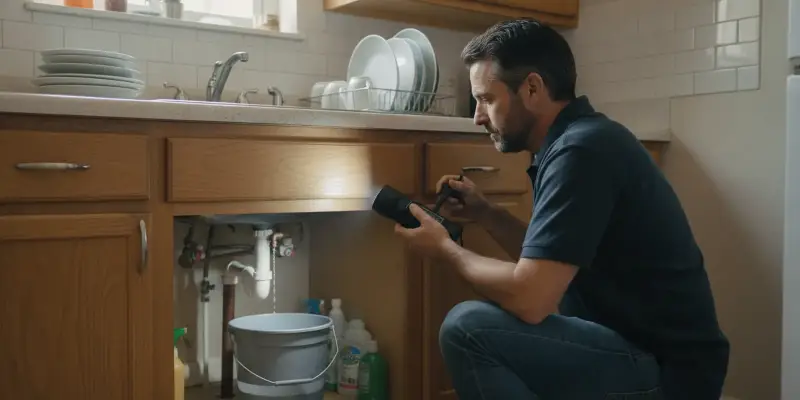
- A rental property plumbing leak checklist helps a landlord, property manager, or tenant respond in a clear order instead of rushing from one concern to another. Start by protecting people, stopping additional water if it is safe, and notifying the right person. Then document what you see, arrange a suitable repair, and check for signs that water reached nearby materials or units. These steps apply to rentals in Pittsburgh, Butler, and surrounding communities.
Call for plumbing repair help or a free estimate
What should you do first when you discover a leak?
Make sure everyone can move around the area safely. Keep children and pets away from standing water, wet flooring, or unstable materials. If water is near an outlet, appliance, light fixture, or electrical panel, do not step into it or touch electrical equipment. Keep people clear and contact the appropriate emergency or qualified professional for guidance.
If a visible fixture shutoff is easy to reach from a dry, safe place, you may be able to turn it off. Common shutoffs are beneath sinks and behind toilets. Turn a valve gently; do not force a stuck, corroded, or damaged handle. If you cannot identify the right valve, the leak continues, or water is spreading, contact the landlord or property manager right away. Tenants should follow the property’s instructions and avoid operating unfamiliar equipment.
For a severe leak, ceiling bulge, rapid spread, or water entering another unit, treat the situation as urgent. Notify the owner or manager immediately using the agreed emergency contact method. If there is immediate danger to people, use local emergency services. Do not wait for a routine maintenance request when water is actively causing damage or creating a safety concern.
How can you describe where the leak is?
Note the fixture or surface where water is visible. Do not assume the wettest spot is where the leak began. Water can travel along a pipe, cabinet base, floor, or ceiling before appearing. A precise description helps the owner or manager pass useful information to a repair professional without asking a tenant to take plumbing apart.
For a sink, report whether moisture is inside the cabinet, on the floor, or around the faucet. Note whether the drip appears continuous, but do not run water to test a suspected leak. Move only small items that are safe and easy to handle. If a cabinet floor is swollen, soft, or discolored, mention it. A photo from the doorway and a close view of the visible area can help document conditions.
For a toilet or bathroom fixture, say whether water is around the base, near a visible connection, or on a nearby wall or floor. Avoid repeated flushing if it seems to worsen the problem. Keep people away from a slippery floor. Do not remove the toilet or tighten an unfamiliar fitting. If water is reaching a room below, tell the manager so both locations can be considered.
For a ceiling or wall stain, record the room and approximate location and note whether it changes. If a ceiling sags, bulges, or sheds material, keep people away from underneath it and request urgent assistance. Do not poke it, cut an opening, or climb to inspect an upper floor or roof. Tell management if there is a unit above so access can be coordinated.
Near an appliance or shared space, identify the appliance or room without moving it. Do not disconnect hoses, unplug equipment from a wet area, or operate electrical controls near water. In a shared building, tell management if a hallway, neighboring unit, or common room is involved.
How can you tell whether a leak needs urgent attention?
Use what you can safely observe, not a risky inspection. A slow drip into a container may allow time for a coordinated repair, but it still deserves a prompt report. Water flowing from a pipe, a growing wet area, a spreading ceiling stain, or a leak that returns after a fixture is turned off needs faster attention. Water can travel behind cabinets, under flooring, or through a ceiling before the visible spot shows its full extent.
- Act immediately: water is flowing or spreading, a ceiling is sagging, several rooms or units are affected, or water is near an electrical hazard.
- Report promptly: a steady drip, damp cabinet, running fixture, or new stain appears without immediate danger.
- Arrange an assessment: a past leak seems dry but left an odor, soft material, recurring discoloration, or changing stain.
This is a practical triage guide, not a diagnosis. A small mark does not prove a hidden area is dry. Report uncertain or changing conditions rather than assuming they will resolve on their own.
What should a tenant tell the property manager?
Contact the owner or manager using the method listed in the lease or property emergency plan. Include the location, when you noticed the leak, whether it is active, and what you have already done. Describe the nearest fixture or room rather than guessing at the source. For example, say that water is under the kitchen sink, when it was first seen, whether the drip continues, and whether you touched any controls. Tell the manager if water reached another room, hallway, neighboring unit, or belongings.
If safe and allowed by property procedure, send clear photos or a short video. Capture an overall view that identifies the room and a close view of visible water or damage. Do not move heavy appliances, open walls, remove fixtures, or take plumbing apart to make a better picture. Keep a copy of your report and note when and how you contacted management. If the first contact does not respond and the problem worsens, use the stated backup route rather than assuming a routine form is monitored.
Make the first report useful
A concise report can be more useful than a long explanation that mixes observations and assumptions. Separate what you know from what you suspect. “Water is dripping from the cabinet floor beneath the kitchen sink; I noticed it at 6 p.m. and it is still dripping” is more actionable than “the pipe is broken,” unless the break is plainly visible. Include whether the water appears to be spreading and whether the affected area is accessible.
For a property manager handling several units, record the unit number and the tenant’s best contact method along with the exact room. Confirm whether someone can provide access, whether there are pets or entry instructions, and whether the report concerns a shared space. These details help avoid a missed visit or a technician arriving without access. Do not ask a tenant to investigate behind a wall or under a heavy appliance to complete the report.
What should a landlord record during repair?
Record the unit, room, fixture, time first observed, whether water is active, and any safe action taken. Note who was contacted and when. If several units may be involved, keep each report tied to the right unit instead of assuming they share one cause. Photograph visible conditions when it is safe and practical, avoid unnecessary images of personal belongings, and store the record with the unit’s maintenance history.
Document the service visit, recommendation, work completed, and any next inspection date. If the cause is not confirmed, label it unknown rather than recording a guess as fact. Coordinate access with the tenant and explain who is expected and when. If another visit or trade may be needed, tell the tenant what is known and what remains uncertain. A closed work order should describe the result, not only that someone visited.
Use a simple incident timeline
A timeline makes recurring problems easier to understand. Start with the first report, then add each contact, inspection, repair, and follow-up. Include dates and times when available, the room or fixture involved, and whether the symptom stopped or returned. If a second report appears later, compare its location and description with the earlier record without assuming the cause is identical.
Keep observations factual. For instance, “dampness visible below the bathroom vanity on Tuesday” is a useful entry. “Tenant caused a leak” is an unsupported conclusion unless a reliable assessment establishes it. Likewise, note that a technician recommended follow-up rather than marking the issue resolved when work remains. Clear records help the owner, manager, occupant, and repair professional understand what is known and what still needs attention.
Separate immediate stabilization from completed repair
Water may be contained before the underlying issue is fully resolved. A bucket, towel, or temporary shutoff can reduce immediate spread, but it does not establish that the source has been repaired or that wet materials are dry. Record any temporary measure and who is responsible for the next step. Make the status plain to the tenant so a temporary pause is not mistaken for a completed repair.
If a professional identifies a follow-up need, write down what must happen, who will arrange it, and whether access is required. For example, the initial visit may address a visible fixture issue while a separate assessment is needed for a stain that appeared in the room below. The record should show that distinction rather than combining both into a single “fixed” note.
What should you avoid while waiting for help?
Do not ignore a leak because it appears minor, or conceal it with paint or a temporary cover before the source is assessed. Do not puncture a bulging ceiling or open a wall; water may be heavy and concealed wiring or other hazards may be present. Avoid chemical drain cleaners or combining cleaning products. Do not force shutoff valves, tighten unfamiliar fittings, or remove a trap if you do not know how to control and contain the water.
A tenant should not undertake work the landlord has not authorized. The appropriate division of responsibility depends on the lease, situation, and local requirements, so use the property’s established process and seek qualified advice when needed. Keep people away from wet electrical equipment and unstable surfaces. If water may be contaminated or the affected area is extensive, leave cleanup to people with appropriate equipment and expertise.
How should you choose the repair handoff?
A plumber or other qualified plumbing professional may be needed for a pipe leak, concealed issue, or repair beyond a simple fixture concern. A handyman may be appropriate for certain plumbing repairs or fixture installations within the provider’s capabilities, once the source and scope are understood. Pittsburgh Locks and More provides plumbing repairs and fixture installation through its handyman services; the right fit depends on the job. The landlord or authorized manager should coordinate work and confirm access.
Explain whether the leak is active, which fixture is involved, whether a shutoff was used, and whether water reached adjacent surfaces. Ask what the visit will cover and whether another specialist may be needed if the source is concealed or more extensive than expected. Review the handyman services and safe first steps for plumbing leaks for related information. These pages do not replace an on-site assessment of an active or hidden leak.
Call to discuss plumbing repair or request a free estimate
Match the work to what is known
When the source is clear and limited, the manager can describe the observed fixture issue and ask whether the provider handles that repair. If the visible water may come from a concealed pipe or has affected multiple areas, say that the source is uncertain and ask whether a plumbing specialist or additional assessment is appropriate. This is a handoff question, not a diagnosis. A provider should be able to explain the proposed scope and identify when the issue falls outside the work planned.
Before access is arranged, confirm who will meet the service provider, which unit or rooms need entry, and whether the tenant has received the appointment details. Share relevant notes and photos rather than asking the repair professional to start from a vague description. If the condition changes before the visit, update the manager and provider; a growing leak may require a different urgency than the original report.
What should the repair conversation cover?
Ask what will be inspected, what work is included, and what conditions could require a different approach. Confirm whether the visit is meant to address the immediate leak, a fixture installation, or a broader issue identified during inspection. If the source is not visible, avoid requesting a guaranteed conclusion based only on a photograph. The person arranging work should understand what the visit can and cannot establish.
After the proposed work is explained, make sure the property decision-maker approves the scope. Tenants should not be asked to authorize additional work unless that authority is part of the property’s process. Keep the contact information for the manager and service provider available, and make a plan for updates if the technician finds a more extensive problem. This keeps the owner informed and avoids confusion about who will approve the next step.
What should you check after the repair?
Ask what was found, what was repaired, and whether follow-up is recommended. Record the date, service, and instructions. If the source was not confirmed or the repair was temporary, make sure the next step and responsible person are clear. Keep an eye on the original area and nearby surfaces for fresh moisture, a renewed drip, a changing stain, soft material, or a musty smell. If symptoms return, report them promptly and refer to the prior maintenance record.
For a rental turnover, record known leak history and check accessible areas around sinks, toilets, and appliances for visible moisture during an authorized inspection. A visual check cannot rule out hidden leaks, but consistent notes can reveal repeat reports. See the rental property turnover repair checklist for broader repair planning.
Follow the same locations you documented
Use the original notes to check the exact spot that was reported, then look only at nearby areas that are safely accessible. Compare new observations with earlier photographs if available. A dry-looking cabinet does not prove that a concealed area is dry, but a fresh stain, renewed drip, or soft surface is a reason to report the change. Do not open a wall or pull up flooring as a follow-up check.
When the repair professional has provided instructions, follow those instructions and route questions to the person responsible for the work. If a recommended follow-up date passes, contact the manager rather than assuming the task was completed. If water returns, give the manager the earlier work date, the original location, and a clear description of what changed. That history can help the next assessment begin with useful context.
Consider adjacent spaces, not only the fixture
Water may show up away from the source, so check visible surfaces in the room below or beside the reported area when access is authorized and it is safe. In a multi-unit building, management may need to coordinate with more than one occupant. Ask each person to report observations separately, with a room and time, rather than treating one person’s account as a complete inspection of the building.
Do not enter an occupied unit without following the property’s access process. A tenant’s report and a manager’s visual check each have limits. If there is a sagging ceiling, electrical concern, rapidly spreading water, or other immediate hazard, keep people away and arrange urgent help instead of conducting routine follow-up rounds.
How can you prepare before a problem?
Give tenants a current maintenance contact, a backup route for urgent problems, and clear instructions about what to report. Explain who is authorized to use accessible shutoff valves. If locations are unclear or restricted, have the responsible person clarify them ahead of time. Keep unit-specific records of plumbing visits, recurring reports, repair dates, and follow-up recommendations. At turnover, confirm contact information and assign a next step for any unresolved issue.
Landlords with several properties can use consistent report fields while keeping records separate by unit. If a property is in the Pittsburgh area, confirm that the provider serves the specific location. Pittsburgh Locks and More is based in Butler and serves Pittsburgh and surrounding communities within an approximately 60-mile radius; travel farther may be considered for suitable jobs. Coverage does not mean every address has the same arrival time. Check the service area information before coordinating a visit.
Make the reporting route easy to use
Place the manager’s contact details somewhere tenants can find them without searching old messages. State which method is best for routine maintenance and which contact route to use when water is actively spreading. Explain what information is most useful: unit, room, fixture, time noticed, whether the water continues, and whether anyone has already used a safe shutoff. A tenant should not need to diagnose the plumbing problem to make a good report.
For a portfolio, use a short form or repeatable message template. Avoid an overly long questionnaire that delays reporting. A few practical fields can capture the essential facts while leaving investigation to the responsible professional. Keep an alternate contact current in case the primary manager is unavailable, and tell tenants how to escalate if circumstances worsen before they receive a reply.
Review recurring reports at turnover
Before a new tenancy begins, review the maintenance history for unresolved leaks, prior repairs, and promised follow-up. Confirm that the new tenant knows how to report an issue and that the manager has current contact details. During an authorized turnover inspection, look for visible signs in accessible areas, such as staining beneath a sink or discoloration around a fixture. Record what you actually see and schedule an assessment when needed; do not treat a quick visual review as proof that hidden plumbing is sound.
Separate confirmed work from items that remain open. If a fixture was repaired but a nearby stain still needs checking, list both facts. If a prior report has no recorded outcome, contact the person who arranged the work and determine whether follow-up is needed. A clear handoff between tenancies can prevent an unresolved item from disappearing simply because the occupants changed.
Landlords can also clarify who will arrange access, approve work, and tell the tenant when the repair is complete. These responsibilities vary by property and agreement, so use the actual lease and management process rather than assuming one standard arrangement. For broader routine maintenance planning, the landlord locksmith and handyman guide discusses coordinating property needs beyond a single leak.
Call to discuss a plumbing repair or request a free estimate
Frequently Asked Questions
Should a tenant shut off water?
Only if the correct valve is accessible from a safe, dry place and the tenant knows how to operate it without forcing it. Notify the landlord promptly and follow property instructions. Stay clear if water is near electrical equipment or the leak is severe.
Does a small drip need to be reported?
Yes. A small drip can worsen or affect material inside a cabinet or beneath a floor. Report where it is, when it started, whether it continues, and any safe steps taken.
Can a handyman repair a rental plumbing leak?
It depends on the source, scope, and provider’s capabilities. Pittsburgh Locks and More offers plumbing repairs and fixture installation through its handyman services, but a concealed or extensive issue may need a qualified plumbing specialist.
What if the leak returns after repair?
Report returning moisture to the manager and reference the prior repair date and location. If water is spreading or creates a safety concern, escalate it immediately rather than waiting for routine follow-up.
A clear checklist helps tenants report problems, helps managers coordinate a safe response, and gives repair professionals useful context. When water is actively spreading or an area may be unsafe, prioritize people and urgent assistance over documentation.
Add comment
Comments