Which part of the doorway is damaged?
Door frame repair can mean anything from touching up a small mark on decorative trim to restoring a jamb that no longer supports a door securely. Before you choose a fix, identify where the damage is and whether the door still opens, closes, and latches normally. That first check helps you explain the problem and decide whether it is cosmetic, functional, or a security concern.
Call 724-996-1463 to discuss the repair or request a free estimate
People often use “door frame” to mean the whole area around a door, but the opening has several parts. Naming the part that is affected makes it easier to describe the job and avoid treating a symptom as the cause.
- Jamb: The vertical sides and top of the frame. Hinges attach to one side, and the latch or deadbolt enters an opening on the other.
- Casing or trim: The decorative material that covers the joint between the jamb and the wall. A dent or chipped edge here may be separate from the door’s support.
- Strike area: The section of the jamb where the latch or bolt enters. A crack or crushed area here can affect how the door secures.
- Hinge area: The part of the jamb that holds the hinges and carries the door’s weight. Loose or split material here can contribute to sagging or alignment changes.
- Threshold: The piece at the bottom of many exterior doors. It is not the same as the side jamb, although problems in either area can affect the doorway.
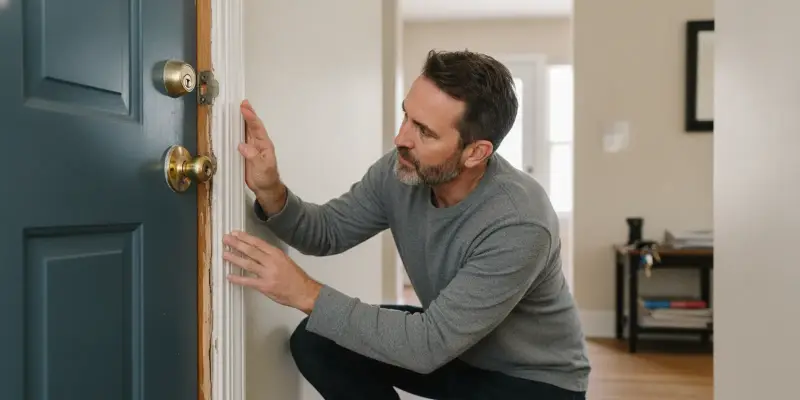
Look at both sides of the door and the full opening. Note whether the damage is on painted trim, the jamb itself, the wall beside the frame, or the hardware. If the material is covered by trim or paint and you cannot tell what is underneath, do not pry it apart just to investigate. Describe what you can see and leave hidden conditions for an on-site assessment.
How can you assess whether the damage affects function?
Start with a visual check rather than immediately trying to adjust the door. Look for a new gap between the door and jamb, a split close to a hinge or strike plate, loosened trim, or screws that appear to have backed out. Compare the top and side gaps. A change from the way the door normally sat may be more useful than a single measurement.
If the door appears stable, test it gently once. Open it and close it without pushing hard. Notice whether it rubs, catches, swings unexpectedly, or sits flush against the frame. Then see whether the latch enters its opening as usual. Do not repeatedly test a door that binds, and do not turn a key or deadbolt against resistance. For an exterior door, reliable latching and locking matter more than a neat finish.
A small surface chip on trim, with no change in door movement or latch operation, is more likely to be a finish concern. A split beside a hinge, a door that suddenly sags, or a bolt that no longer meets the strike opening deserves closer attention. If a door to a business or home will not secure, treat that as a prompt to arrange help rather than as a cosmetic repair to postpone indefinitely.
Write down the specific symptoms. “The door is broken” is less useful than “the upper hinge side has a visible split, and the door now rubs at the top” or “the latch-side jamb is cracked and the deadbolt does not line up.” A precise description helps the service provider understand whether the main concern is trim, alignment, support, or lock function.
What are common reasons a frame becomes damaged?
A recent impact or repeated slamming can stress the jamb, especially near the latch. A door that is heavy or repeatedly forced against a stop may leave a dent, loosen trim, or crack material around the strike area. A hinge that has loosened can also allow the door to move out of its usual position, putting uneven pressure on the frame.
Moisture is another clue to record. Water near an exterior entry, a damp wall, or a recurring leak can affect surrounding materials. If you see staining, swelling, soft material, or a musty smell, include that information when asking for an assessment. A repair to the visible frame may not address the reason the material became damaged, so mention any known source of water rather than covering the area first.
Sometimes the change is gradual. The door may begin rubbing in one season, a latch may need more pressure over time, or a small crack may widen. Do not assume the frame is the only cause. The door, hinges, hardware, nearby wall, or opening may also be involved. A repair plan should account for how the door behaves, not just the most obvious mark.
Note when the problem started and what changed shortly before it appeared. Useful details include a door being slammed, a lock or handle being changed, a period of moisture, or a shift from occasional rubbing to constant binding. You do not need to diagnose the cause yourself. The aim is to preserve the clues that can help a professional evaluate the job.
Which repairs might be limited to surface finishing?
A shallow dent or chipped paint on decorative casing can sometimes be handled as a small finishing task by someone comfortable with basic home maintenance. The broad sequence is to clean the surface, use a filler suitable for the material, let it cure as directed, sand carefully, and repaint or refinish to match. Protect the door, floor, and nearby hardware, and follow the product instructions.
That kind of approach is only for a minor surface defect in non-supporting trim. Avoid filling a split at a hinge, strike plate, or other area that holds or aligns the door and then treating the patch as a structural repair. A cosmetic finish can hide a change without restoring the material beneath it. Stop if the damage is deeper than it appeared, if the filler does not suit the surface, or if the door starts to move differently.
Loose decorative trim may need to be secured if the material behind it is sound. But a fastener that spins without holding, a split that runs into the jamb, or a gap that keeps reopening suggests the problem may not be the trim alone. Do not drive longer screws into an unknown area or cut into the frame without understanding what lies behind it. A quick-looking fix can make later alignment or repair more complicated.
For a purely cosmetic issue, take a photo before work and check the finished area after it dries. Confirm that the door still opens and closes as before. If the defect returns, grows, or is accompanied by sticking or a latch problem, reassess rather than applying another layer of filler.
When does a door frame problem need professional attention?
Consider professional help when the damage involves a cracked jamb, loose hinge attachment, a split around the latch or strike plate, visible movement, or a door that no longer closes or locks as it should. These conditions affect more than appearance. The door may need to be supported and aligned while the damaged area is evaluated, and an improvised patch may not restore reliable operation.
There is also a practical boundary between surface work and work that affects security hardware. If the lock, deadbolt, strike opening, or door alignment is part of the problem, explain that when arranging help. Do not remove the lock or hinges to expose the damage unless you are prepared to support the door and put the hardware back correctly. Do not force the door as a temporary way to make the latch catch.
For a home, office, or rental unit, think about whether the affected door is an exterior entry, a frequently used interior door, or a door that controls access to a particular space. Tell the provider if it is currently secure and whether occupants can use another entrance. This context helps communicate urgency without guessing at a response time or deciding the repair scope in advance.
If a door cannot be secured, use another secure entrance if one is available and share the concern when you call. If there is an immediate personal safety emergency, contact local emergency services. A service call about a damaged frame is not a substitute for emergency response.
Should you contact a handyman or a locksmith?
The right contact depends on what the damaged frame is doing. A handyman may be a suitable place to ask about repair or replacement of trim and other property materials when the lock works and the door remains secure. Pittsburgh Locks and More describes a range of handyman work, including drywall repair and installation and other property repairs. Review the handyman services information and describe the frame, material, and symptoms to check whether the job is a fit.
A locksmith is the more relevant contact when the frame damage affects a lock, strike plate, deadbolt alignment, or the ability to secure an entry. Pittsburgh Locks and More lists residential lock installation, rekeying, home lockouts, commercial locks, and security solutions on its locksmith services page. If the jamb is split at the latch, mention both the damaged frame and the lock behavior; a lock concern may need to be considered alongside the frame.
Some jobs touch both areas. For example, a latch-side split may leave the lock in place but prevent the bolt from lining up. Another situation could involve loose hinge-side material and a door that now rubs and will not latch. Explain the symptoms without naming a repair you have not confirmed. Ask whether the provider can assess the frame concern and whether any separate lock work should be discussed.
Pittsburgh Locks and More is a family-run local provider serving residential and commercial customers with locksmith and handyman services. Its handyman work is guaranteed, and electrical work is handled by certified professionals; those commitments do not establish the scope of a particular frame repair, so confirm the proposed work for your situation. For background on the business, see the about page.
Call 724-996-1463 to describe the frame and ask about a free estimate
What details should you gather before arranging work?
A few clear details can make the first conversation more productive. You do not need special tools or a technical diagnosis. Aim to report what the door is doing and what you can see, then let the provider advise whether an in-person review is needed.
- Identify the door. Say whether it is an exterior or interior door, where it is located, and whether it serves a home, business, or rental property.
- Pinpoint the damage. Describe the hinge side, latch side, top, trim, or threshold. Note whether the material is split, dented, loose, chipped, or visibly affected by moisture.
- Report the function. Explain whether the door rubs, sticks, closes flush, latches, and locks. Do not force it to test every symptom.
- Give a timeline. Say when you first noticed the issue and whether it followed an impact, hardware change, or water exposure.
- Take useful photos. Include one image of the whole doorway and closer views of the damaged area, hinge or strike plate, and relevant lock. Keep the camera level and use ordinary lighting so the location is clear.
- State the immediate concern. Tell the provider whether the issue is mainly appearance, operation, security, or a mix, and whether the entry can currently be secured.
- Ask about next steps. Confirm whether the job is within the service area, what information is needed to estimate it, and whether an on-site assessment may be needed before the scope is clear.
For a property manager, include the unit or door location, access arrangements, and who can approve work. If several doors have damage, list each separately rather than saying “multiple frames need repair.” Separate notes help distinguish a cosmetic touch-up from an entry that will not lock. At a business, identify whether staff should avoid using the door until it is assessed and how visitors should enter in the meantime.
Before work begins, ask what the proposed scope includes. For example, clarify whether the discussion is about trim, jamb material, door alignment, or related lock hardware. Ask how any uncertainty will be handled if the visible damage reveals a different issue. Pricing is quote-based, so request a job-specific estimate rather than relying on a generic online figure; the condition, access, materials, and necessary work can vary.
How should Pittsburgh-area customers plan for location and timing?
Pittsburgh Locks and More is based in Butler, Pennsylvania, and serves Pittsburgh and surrounding communities within an approximately 60-mile radius. The company may travel farther for suitable jobs, but coverage and scheduling depend on the particular location and work. Share the property’s town or ZIP code when you call and ask whether it falls within the service area. The service area information provides a general overview.
When hours matter, the company states availability from 7:00 AM to 11:00 PM, seven days a week. Do not assume a particular arrival time can be promised. Explain whether the door is exterior, whether it can be secured, and whether the concern needs prompt attention or can be scheduled. A clear description is more useful than a guess about how quickly a repair can be completed.
If you are comparing providers, focus on the actual job. Ask whether they can evaluate the type of damage, what information or photos would help, whether a site visit is needed, and what is included in an estimate. If a lock is involved, say so early. A provider who understands that both the frame and hardware may be affected can clarify the appropriate next step without you committing to a repair based on incomplete information.
What should you avoid while waiting for help?
- Do not repeatedly slam or force a door that binds; extra pressure can worsen a split or change the alignment.
- Do not keep turning a key or deadbolt against resistance. Stop if the lock will not move normally and explain what happened.
- Do not treat a patch of filler or paint over a split beside the lock as proof that an exterior entry is secure.
- Do not remove hinges or lock hardware without a plan to support the door and restore its alignment.
- Do not cut into a jamb or drive long fasteners into an area you have not inspected and do not understand.
- Do not use expanding foam or an unsuitable filler in place of evaluating damaged material that supports a hinge or strike plate.
- Do not hide recurring moisture or cover a damp area before noting where the water may be coming from.
If you need to keep using the door, handle it gently and avoid leaning on a visibly loose frame. If it is an exterior entry that will not secure, use another secure entrance where practical and communicate that condition when requesting help. For a vulnerable business entry, let the appropriate person know and use a safe alternate access plan while you arrange an assessment.
Frequently Asked Questions
Can a small crack in a door frame be left alone?
A shallow crack in decorative trim may be a finish issue if the door stays aligned and closes and latches normally. Watch for growth, movement, rubbing, or changes to the lock. A crack beside a hinge or strike plate, or one that appears to affect support, needs a closer assessment.
Does a damaged frame always need full replacement?
No. The appropriate work depends on the location and extent of the damage, the material, and whether the door remains supported and secure. A professional can assess whether the problem is limited to trim, can be addressed locally, or calls for broader work. Do not decide that a cosmetic patch is sufficient just because it covers the visible mark.
Should I call a locksmith or handyman for a split jamb?
Consider a locksmith if the split affects the latch, deadbolt, strike plate, or the ability to secure the entry. A handyman may be relevant for trim or other frame-material repairs when the lock functions normally. If both areas are involved, describe both symptoms and ask which service is appropriate.
Can I keep using a door that rubs against the frame?
If the rubbing is slight and the door still closes and locks without force, note the change and arrange an assessment if it persists. Do not keep forcing it if resistance increases, the latch fails, the frame visibly shifts, or the material is splitting. For an exterior door that no longer secures, make that clear when you request help.
Call 724-996-1463 for help or a free estimate
A careful door frame repair plan starts with locating the damage, checking how the door operates, and sharing the facts so the right kind of help can be considered.
Add comment
Comments