Learn how to assess and repair small holes in hollow-core and solid wood doors, when to replace the door, and when to ask a professional for help.
Learning how to repair a hole in a door starts with identifying what the door is made of and how large the damage is. A small puncture in a hollow-core interior door needs a different repair than a deep hole in a solid wood entry door. Check the damage, the door’s purpose, and any nearby hardware before choosing a repair method.
Call for help or a free estimate
What should you check before repairing a hole in a door?
Start by examining both sides of the door and the area around the hole. Note the hole’s width and height, whether the surface is split or crushed, and whether the damage goes all the way through. A small, clean puncture may be straightforward to fill. A ragged opening, cracked panel, or loose section may need a patch or a replacement door.
Next, identify the door type and its job. Is it a lightweight interior door, a solid wood door, a metal door, or a door with a glass panel? Does it lead outside, separate a garage from living space, or protect a business? The material and purpose affect what repairs are appropriate. For a door with a rating, special construction, or an important security function, do not assume a cosmetic patch will restore its original performance.
- Look at the door edges. A hollow-core door often has a thin outer skin and a lightweight interior. Solid wood feels heavier and has material throughout the slab.
- Check for moving parts. Make sure the damage is not near hinges, a latch, a lock, a closer, or a glass insert. A repair close to hardware may affect fit or operation.
- Inspect the frame and hardware. If the door rubs, will not latch, or has a damaged jamb, the hole may not be the only issue.
- Consider who uses the space. A rental, commercial space, or shared entry may need approval before you alter or replace a door.
If the damage affects a lock or entry security, avoid treating filler as a permanent security repair. You can review the company’s locksmith services information and ask what kind of help may fit the issue. Do not share keys, access codes, or private details in a public message.
Can you repair a small hole in a hollow-core door?
Many small, shallow holes in an undamaged interior hollow-core door can be repaired with a suitable filler and careful surface preparation. The goal is to create a stable, smooth patch that blends with the door after it is painted. This is a cosmetic repair. It does not turn a hollow-core door into a solid or security-rated door.
Before starting, read the product label for the filler, adhesive, or patch material you plan to use. Follow its application and drying directions, and work in a ventilated area as directed. Protect the floor and nearby surfaces. Wear eye protection when sanding, and use a dust mask if the product or sanding instructions call for one. Keep children and pets away from wet materials and tools.
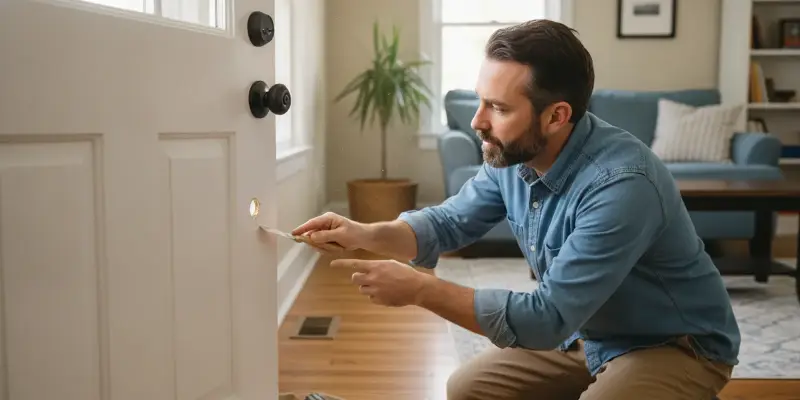
Gather only the materials that match the repair: a putty knife sized for the opening, the recommended filler or patch kit, a sanding block or suitable fine abrasive, and compatible primer and finish if needed. A broad knife can help level a patch, but pressing too hard may spread material across more of the door face. Keep a clean cloth nearby for surface cleanup, following product guidance about whether water or another method is appropriate. Do not mix products unless their instructions say they can be used together.
How do you patch a small hollow-core door hole?
- Remove loose material. Trim or lift away only the splintered or detached edges. Avoid enlarging the hole unnecessarily or cutting deeply into the thin door skin.
- Stabilize the opening if needed. For a very small surface dent, a compatible filler may be sufficient. A larger opening may need a backing or repair patch designed for hollow doors so the filler has support. Follow the patch manufacturer’s instructions.
- Apply the repair material in controlled layers. Press it into the opening without forcing material through the door. Larger repairs may need more than one layer. Respect the product’s recommended thickness and drying time.
- Sand gently after it has cured. Use a fine abrasive and keep the sanding area small. Stop when the surface is even with the surrounding door skin. Do not sand through the thin surface.
- Prime and paint as appropriate. Use products compatible with the door and repair material. A test on an inconspicuous area can help you check color and finish. Allow each coat to dry according to its label.
- Check the door after finishing. Open and close it slowly. Confirm that the patch does not catch on the frame and that hinges and latch still work normally.
For a hole larger than a minor puncture, a patch can become more complicated. Hollow-core doors have limited material behind the face, and a large repair may remain visible or fail if it does not have adequate support. If the door is badly crushed, split across a wide area, or repeatedly damaged, compare the time and appearance of a repair with replacing the slab.
How should you repair a hole in a solid wood door?
A solid wood door provides more material to work with, but the repair still depends on the damage and finish. A shallow nail hole or small dent may take wood filler. A deep gouge or opening may need a fitted wood patch, careful shaping, and a finish that matches the surrounding grain. A simple layer of filler may look obvious on a stained door because stain reveals differences in color and grain.
Clean the damaged area and remove loose splinters without cutting away sound wood. Use a filler intended for the door’s material and the planned finish. For a larger opening, make sure a patch is supported and secured according to the repair product’s directions. Let the material cure fully before sanding. Keep the repaired surface level with the existing door, then test primer, paint, or stain on a less visible area if possible.
Do not remove large sections of a solid exterior door without understanding how that could affect the door’s structure, weather protection, or security. If the door is warped, cracked through, or damaged around the lock or hinges, ask for an assessment before deciding whether a patch is appropriate. A neat surface is not the only measure of a successful repair; the door must still operate and serve its intended purpose.
How can you make the repaired area blend in?
A patch can be structurally sound and still stand out because the color, sheen, or surface texture does not match. Before buying finishing products, determine whether the door is painted, stained, or covered with a veneer or factory finish. A painted surface is often more forgiving than stained wood, where the grain and natural color variation remain visible through the finish.
Keep a small paint chip or a sample of the finish, if available, when asking a paint supplier about a match. Do not remove material from a visible area just to make a sample. Even a close paint color may look different when applied beside an older finish that has faded or yellowed. Test the proposed finish on a hidden edge or spare material first, and allow it to dry before judging the result.
Texture matters as well. A smooth patch may look obvious on a door with a pronounced grain or molded pattern. Trying to recreate a decorative profile without the right materials can make the repair more noticeable or damage the surrounding surface. Keep the work area as small as practical, feather the edges carefully where the product allows, and avoid sanding through paint or veneer around the hole.
When the door has a strong wood grain, a glossy finish, or a prominent location, decide in advance how much visible variation is acceptable. You may choose a professional assessment or replacement rather than spending time on a patch that cannot produce the appearance you want. For a utility or storage area, a safe, stable repair may matter more than an invisible finish.
What if the door is metal, glass-paneled, or near a lock?
Metal doors and doors with glass inserts require different materials and methods from wood doors. A metal door may have a finish, core, or construction that a standard wood filler cannot repair. A glass panel must not be treated as part of a routine hole patch. If glass is cracked or loose, keep people away from the area and arrange an appropriate repair rather than attempting to fill around it.
Take extra care when damage is near a deadbolt, knob, latch, hinge, or door closer. The repair should not obstruct moving hardware or conceal a problem with the mounting points. If the lock does not turn smoothly, the latch misses the strike plate, or the door will not close securely, address that function before focusing on paint. Pittsburgh Locks and More provides locksmith services that include residential lock installation, rekeying, home lockouts, commercial locks, and master key systems; the right next step depends on the specific problem.
For a door that is part of a fire separation, an exterior entrance, or a controlled commercial area, check with the responsible owner, property manager, or building professional before making changes. A cosmetic repair is not a substitute for confirming that the door remains suitable for its role. If you are unsure what type of door you have, note its location, material, and visible markings before asking for guidance.
How can you check the door after making a repair?
Once the repair material and finish are fully dry, test the door slowly rather than swinging it hard. Check that the edge clears the frame and floor, the hinges remain secure, and the latch enters its opening without needing extra force. Look at the patched area from both sides and from a few steps away. A small ridge or raised edge can catch on the frame or clothing even if it seems smooth when viewed up close.
If the door has a knob, deadbolt, or closer, operate each item as it normally would be used. Do not force hardware that binds. A repair that has shifted into the door’s edge or sits near a mounting point could interfere with the mechanism. Stop if the door begins sticking, the latch no longer aligns, a hinge feels loose, or the patch moves or cracks. These signs suggest that the damage or repair needs another look.
For an exterior door, check that it closes fully and that weatherstripping is not folded, blocked, or pulled away by the repair. Do not assume a neat painted surface means the door is secure. If the lock or door does not function as expected, keep the opening secured in a safe way and seek appropriate help rather than relying on the patch.
In a rental or business, let the person responsible for the property know when the work is complete and whether anything still needs attention. Keep the before-and-after photos with the maintenance record. That simple record can help distinguish the original damage from a later problem and make future repairs easier to plan.
When is replacing the door a better choice than patching it?
Repair is not always the most practical option. Replacing the door may be worth considering when the opening is large, the face is split over a broad area, the core is exposed and crumbling, or several previous patches have failed. Replacement can also make more sense when a door no longer fits the frame or cannot latch reliably after adjustment.
Use these questions to compare the options:
- Can the damage be stabilized? If the material around the hole is loose, cracked, or badly crushed, a surface patch may not hold well.
- Does the door still work? A door that swings freely and latches securely is a better repair candidate than one with several operating problems.
- Does appearance matter in this location? A painted utility-room door may tolerate a visible repair better than a prominent entry or customer-facing business door.
- Is the door’s construction important? Exterior, rated, glass-paneled, or security-related doors may require a more informed decision than filling a small interior blemish.
- Are you allowed to make the change? Tenants and commercial occupants should confirm responsibilities with the owner or property manager.
For a rental or managed property, document the damage with clear photos before work begins. Share the location, door type if known, approximate size of the hole, and whether the door still closes and latches. Agree on who will approve the repair and who will coordinate access. This helps avoid a cosmetic fix that fails to address the actual maintenance concern.
Call 724-996-1463 to ask about your door repair
What mistakes can make a door-hole repair worse?
Several common shortcuts can lead to a rough finish or a patch that does not last. Avoid filling a large unsupported opening with a single thick mass of material. It may sag, shrink, or dry unevenly. Use a suitable backing or patch where required, apply material in the recommended layers, and allow enough time for each layer to cure.
- Do not use the wrong filler. Materials made for a different surface may not bond or finish well on the door.
- Do not skip surface preparation. Dust, loose paint, and splinters can interfere with the repair. Clean the area as the product directions allow.
- Do not rush drying and sanding. Sanding too soon can pull material out of the opening or leave an uneven surface.
- Do not over-sand a hollow-core door. Its outer skin can be thin, and sanding through it can create a larger repair.
- Do not paint over a functional problem. A sticking latch or loose hinge needs attention in addition to surface work.
- Do not assume a patch restores security. If the damage compromises an exterior door or lock, get the function assessed.
Also avoid drilling or cutting into a door unless you know what is behind the surface and the work is appropriate for that door. If you encounter wiring, a glass panel, unknown hardware, or a door construction you cannot identify, stop and seek suitable help.
How should Pittsburgh-area homeowners and businesses plan the repair?
Before arranging work, gather a few practical details: the door’s location, whether it is interior or exterior, what it appears to be made of, the approximate hole size, and whether the door opens, closes, and latches normally. Take one photo showing the whole door and another close-up of the damage. Avoid including personal information or access codes in the images.
Think about timing and access, too. If the door is needed for privacy, security, or daily business operations, say so when requesting an estimate. Pittsburgh Locks and More is based in Butler, Pennsylvania, and serves Pittsburgh and surrounding communities within an approximately 60-mile radius; travel and response can vary by location. The business lists service availability from 7:00 AM to 11:00 PM, seven days a week, and does not describe itself as a 24-hour service. You can check the service-area information to see the general coverage description.
Handyman work can include minor electrical repairs and installations, plumbing repairs and fixture installation, drywall work, and tile and grout work. Whether a particular door repair is within scope depends on the door and the damage, so describe the job and ask before making plans. For an overview of the company’s home maintenance offerings, visit the handyman services page. The company says its handyman work is guaranteed, and electrical work is handled by certified professionals; do not assume those details apply to a door repair unless the team confirms the scope.
If you would rather have someone assess the damage, call 724-996-1463 to discuss the door and ask for a free estimate. Share whether the door is in a home, rental, or business, and whether the issue is cosmetic, functional, or related to security. The company’s about page provides additional background on the local, family-run business.
Call to discuss your door repair and request an estimate
Frequently Asked Questions
Can I use spackle to repair a hole in a door?
Use a repair product suitable for the door material and the size of the damage. Spackle is generally intended for wall surfaces and may not be strong or suitable for a door that moves and is handled regularly. Check the label and choose a door-appropriate filler or patch system. Large holes may need backing or a different repair plan.
Can a hole in a hollow-core door be repaired without replacing the door?
Often, a small hole in a hollow-core interior door can be patched and refinished. A larger or badly crushed area may be difficult to stabilize and blend. If the door is damaged around its hinges, latch, or lock, or serves an exterior or special purpose, get advice before treating a cosmetic patch as a complete repair.
How long does it take for a door patch to dry?
Drying and curing times vary by product, layer thickness, room conditions, and the repair method. Follow the product label rather than relying on a general time estimate. Wait until the material is ready before sanding, priming, or painting.
Should I repair a hole in an exterior door myself?
A minor blemish may be manageable, but damage to an exterior door can affect weather protection, operation, or security. If the opening is large, near the lock or hinges, or the door no longer closes securely, have the issue assessed before attempting a cosmetic patch. A patch alone may not restore the door’s intended function.
Can Pittsburgh Locks and More repair any door?
Not every door material or repair is necessarily within scope. Call 724-996-1463, describe the door and damage, and ask whether the team can help or provide a suitable estimate. Share your location so the company can confirm service-area and scheduling details.
A careful assessment helps you choose between a small patch, a more involved repair, and replacing the door. Start with the material, the size of the damage, and whether the door still serves its purpose safely and reliably.
Add comment
Comments